In our recent posts, we covered everything related to organic digital marketing, including content marketing, search engine optimization, email marketing, and social media marketing.
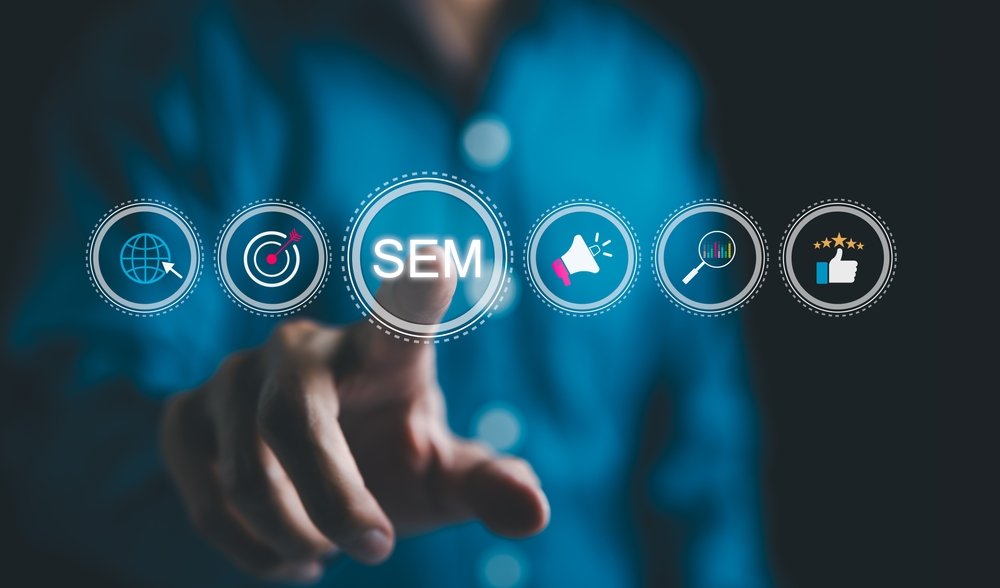
Search Engine Marketing (SEM) is a paid form of marketing that you can utilize to promote your business and increase the visibility of your website.
In this post, we are going to walk you through Search Engine Marketing that will help you to understand the basics. Let’s get started.
What is Search Engine Marketing (SEM)?
Search Engine Marketing (SEM) is a digital marketing strategy that promotes websites by increasing their visibility in search engine results pages (SERPs), primarily through paid advertising such as pay-per-click (PPC) campaigns.
It helps businesses attract targeted traffic by placing ads in prominent positions on search engines like Google and Bing. Unlike Search Engine Optimization (SEO), SEM is a quick way to gain traction, generate leads, and increase sales through paid advertisement and promotion. However, the results are much quicker than organic methods.
SEM involves marketing and paid search campaigns, usually Google AdWords, which allows businesses to display their product/service on top of the page shown against the keywords being searched by users.
What is The Difference Between SEM And SEO?
SEO and SEM both fall under digital marketing techniques used to gain visibility and convert. However, the difference between the two methods is that SEO involves a long-term commitment to gain visibility, drive traffic, and improve the website’s reputation. Whereas SEM involves immediate results that involve money to display results on a search engine.
Here’s a difference between SEM and SEO:
| Aspect | SEO (Search Engine Optimization) | SEM (Search Engine Marketing) |
| Definition | Improving the website’s visibility organically for free | Getting visibility on search engines through paid advertising |
| Cost | Involves no cost for clicks | User has to pay for each click and impression |
| Time for Results | Requires a lot of time to show up on the search engine | Quickly shows up on the search engine through paid promotions |
| Longevity | Long-term results and stays for a longer period | Works until the budget ends |
| Best for | Building brand authority, credibility, and trustworthiness | Helps in generating quick leads and sales without investing time |
| Click Trust | Organic search results are more trustworthy for users | Ads can be skipped or scrolled down |
Why Is SEM Important for Small and Medium-Sized Businesses?
Digital marketing plays a pivotal role in boosting visibility, conversion, and trustworthiness. It could be done in an organic way, but it requires a long-term plan and effort. Whereas paid advertising or search engine marketing just requires a budget to help you boost visibility and generate revenue.
A lot of businesses that are just starting from small scale and cannot wait for long rely on paid advertisement. Here’s why SEM is important for small and medium-sized businesses and benefits them in a short period.
Helps Boost Visibility
Organic results are displayed after a lengthy process that involves a series of techniques and requires patience due to increased competition. However, when it comes to search engine marketing, the businesses can appear on top of search results without putting much effort. This particularly helps in enhancing the visibility of the website, resulting in increased awareness, customer engagement, and conversions.
Gain More Eyeballs
SEM involves setting the right budget and reaching the target audience by optimizing the ad with specific keywords. Moreover, it can be further filtered out by selecting the particular demographics, devices, and locations. Filtering out further helps in reducing the cost and reaching the target audience as per their needs.
Little Effort, More Results
The outcomes of SEM are lucrative with little effort compared to the organic method. As soon as the business sets up the ads and decides the budget, it will show up on the search engines. This means a startup or a small business with limited funds can attract an audience in a short period and convert it into paying customers.
Measure the Outcome
When it comes to measuring the output, paid ads can be tracked by monitoring different metrics such as impressions, click-through rates (CTR), and conversions. With the help of these metrics, businesses can measure ROI. If the ads aren’t paying off, a little tweak in the strategy would do the work.
Cost-effective, if Done Rightly
Search Engine Marketing works on a PPC model. This means that when any user clicks on the ad, the advertiser needs to pay for it. The model is quite effective because the budget can be controlled by applying the right strategies. For instance, you can allocate a set amount of budget for the month as per your limited funds.
Increased Website Traffic and Conversions
SEM also allows businesses to bring visitors to their website that is either selling products or services. The purpose is to redirect visitors who are looking for a solution to the website. It ends up with increasing website traffic and more conversions.
Types of SEM Campaigns Businesses Run
Different types of SEM campaigns can be tailored and displayed according to the target audience. For instance, if your target audience is on video platforms, there is much more potential in the video ads. Let’s take a look at some of the types of SEM campaigns businesses can run to gain visibility.
Google Ads
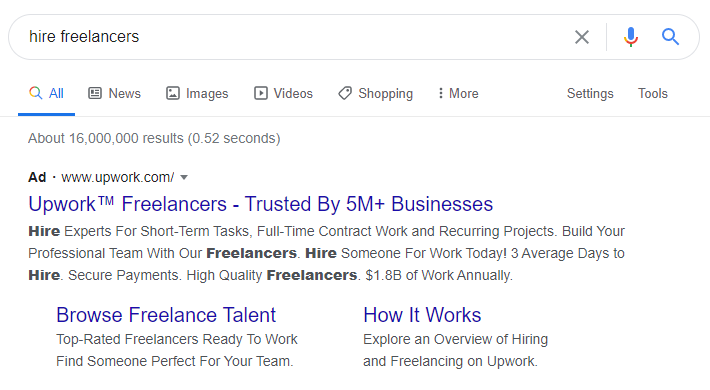
Google Ads are one of the common types of SEM campaigns used by businesses to gain visibility and traffic. The search ads are usually displayed on top or bottom of the SERPs against certain keywords searched by users.
Shopping Ads
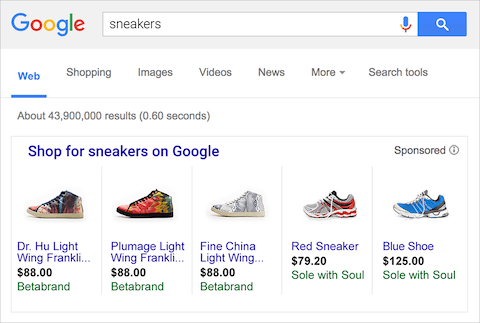
Shopping ads are another type of SEM campaign run by e-commerce stores. The shopping ads are displayed at the top or middle of the SERPs with an image of the product, price, short title, and rating.
Video Ads
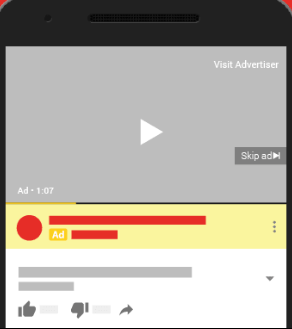
Video ads are usually displayed on YouTube at the start, middle, or end of the video. They are highly targeted towards a certain group of people depending on their interests, demographics, and location. The purpose, however, is the same i.e,. to increase brand awareness and increase conversions.
Display Campaigns
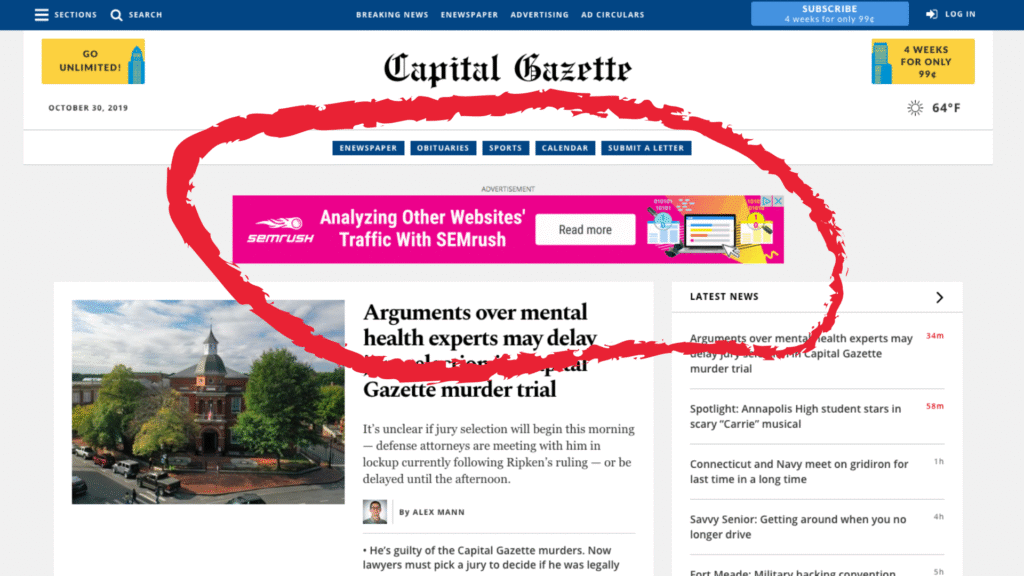
Display ads are the ads that appear on applications and websites. These ads are displayed on websites based on one’s interests and preferences. The sites are pulled from Google Display Network (GDN), which includes a group of more than 2 million websites, apps, and videos.
Local Service Ads
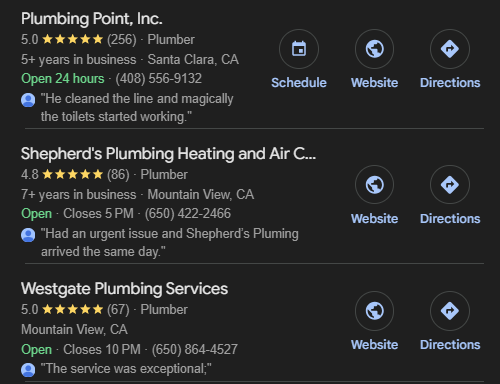
Local Service Ads (LSAs) are Google’s specialized ads that connect local businesses directly with nearby customers. They normally appear at the very top of search results and operate on a pay‑per‑lead model instead of pay‑per‑click. They are especially useful for service providers like plumbers, electricians, lawyers, and healthcare professionals, helping them gain verified leads while building trust.
App Ads
App ads are normally used to display and promote your ad on different platforms, such as YouTube, Google Display Network, and the Play Store. They can appear across platforms like Google Search, YouTube, Google Play, and within other apps, and are usually optimized automatically to reach the most relevant audience based on user behavior and interests.
How Businesses Measure Success in Search Engine Marketing?
Running SEM campaigns without tracking the results will surely not be helpful. Here are some of the metrics businesses should measure when running a paid campaign.
| Metric | Description |
| Impressions | The total number of times your ad is shown to users on search results, websites, apps, or platforms. Impressions indicate visibility and reach, not engagement. A single user may see the same ad multiple times, and each view counts as one impression. |
| Clicks | The number of times users actively click on your ad. Clicks show direct interest in your message, offer, or product. Higher clicks usually indicate relevant targeting and compelling ad copy. |
| Click-Through Rate (CTR) | The percentage of impressions that resulted in clicks. It is calculated by dividing clicks by impressions. CTR measures how effective your ad is at attracting attention. A higher CTR usually means strong ad relevance and messaging. |
| Cost-Per-Click (CPC) | The average amount you pay each time someone clicks on your ad. CPC reflects competition, keyword demand, and quality score. Lower CPC means you are getting traffic more efficiently for your budget. |
| Cost-Per-Impression (CPM) | The average cost you pay for 1,000 impressions. CPM is mainly used in brand awareness and display campaigns, where the goal is exposure rather than clicks or conversions. |
| Conversion Rate | The percentage of users who complete a desired action after clicking your ad, such as making a purchase, filling out a form, or signing up. This metric shows how effective your landing page and offer are. |
| Cost-Per-Conversion (CPA) | The average cost you pay for each completed conversion. It is calculated by dividing total ad spend by the number of conversions. CPA is one of the most important profitability metrics, as it shows how much you are paying to acquire a customer or lead. |
Mistakes to Avoid in Search Engine Marketing (SEM)
Businesses, especially those with limited funds or startups, get too excited about Search Engine Marketing (SEM) when they see the results are instant. But in the phase of excitement, they carry out things that shouldn’t be done in the first instance. Let’s talk about some common mistakes to avoid when running a paid ad campaign.
Keyword Selection is Poor
Poor keyword selection is one of the reasons many businesses fail in SEM campaigns. They bear too much cost in running ads. It is due to choosing generic keywords or too broad keywords to target. For instance, smartphone is a generic keyword, whereas a budget smartphone under $100 is a long tail keyword with a specific target audience in mind.
Negative Keyword
Negative keywords in an SEM campaign are words or phrases you exclude so your ads do not show when people search for those terms. They help you avoid irrelevant traffic, save ad spend, and improve conversion rate.
If you run an SEM campaign for selling laptops online and use negative keywords like repair, used, parts, manual
Your ad will not show, because the person is not looking to buy a new laptop.
Set it and Forget it
When it comes to paid marketing campaigns, you cannot leave it on its own. SEM campaigns require testing and tweaks on a regular basis. If you set it and forget it, your dollars will start draining, and you may lose money more than you earn. Make sure to check the campaign, do A/B testing, and make some tweaks if required.
Forgot to Mention about Your Business
SEM campaigns require adding a phone number so that anyone who is interested in your business can call right away. However, it may cost you money if you do not mention who you are and what you do. People might misjudge you due to a lack of information.
Bidding on Your Brand Name
Bidding on the brand name is a good idea. But not when you are just starting your campaign or when you are unknown to your target audience. It will not only cost your fortune, but also end up annoying customers.
What Role Does AI Play in SEM Campaigns?
AI is revolutionizing SEM campaigns by making them smarter, faster, and more profitable. Here’s how SEM campaigns are becoming more targeted, require less effort, and help you plan smarter SEM campaigns.
Smarter targeting: AI analyzes user behavior, intent, location, and device to show ads to the right people at the right time.
Automated bidding: AI adjusts bids in real time to maximize conversions and reduce wasted spend.
Better keyword optimization: AI finds high-intent keywords and adds negative keywords automatically.
Ad copy optimization: AI tests multiple headlines and descriptions and prioritizes the best-performing ones.
Predictive insights: AI forecasts trends and performance, helping marketers make data-driven decisions faster.
Launch Smarter Ads that Convert
Ready to turn your ad spend into real, measurable growth? With Dev Souls SEM services, we help you reach customers at the exact moment they are searching, using data-driven targeting, smart bidding, and continuous optimization. Stop wasting budget on clicks that do not convert and start running search campaigns built to deliver leads, sales, and ROI.