The digital era is all about getting online and showing visibility to the customers. Whether it be a startup, an online store, or a service-based company, the success lies in going online and showing presence on every platform where starving customers are looking for solutions.
Imagine your house has a clogged pipe that prevents water from draining.
The first thing you would do is search for “plumbing services in my area” on Google to get the list. A list will appear with all the contact details, reviews, and other important information. You will call the best one, get the services, pay, and get the problem fixed.
What would have been the situation if the plumbing service provider hadn’t gone online? You might not even know the company is providing plumbing services in your area. This also means that the plumbing service provider lost the opportunity to get found and offer their service, resulting in losing the opportunity to make money. That’s the power of digital marketing.
In this detailed guide, we will discuss all about digital marketing for business growth, types of digital marketing, differences between traditional and digital marketing, and so much more.
Without further ado, let’s get started.
What Is Digital Marketing?
Digital marketing is the practice of using digital channels, platforms, and technologies to promote products, services, or brands. It involves strategies and tactics across:
- Search engines (SEO, SEM, paid ads)
- Social media platforms (organic posts, influencer marketing, paid campaigns)
- Websites & content marketing (blogs, videos, infographics, e-books)
- Email marketing (newsletters, personalized campaigns)
- Display & promotional ads (banner ads, retargeting, programmatic advertising)
- Mobile marketing (apps, SMS, push notifications)
You might be wondering why digital marketing is important nowadays. Just consider the example of plumbing services we discussed earlier. Getting found online and telling your customers who you are, what you do, and where to contact you is what digital marketing does.
However, the approach changes for different businesses at different times. Take an example of a plumbing service that was found on Google My Business, where you got the contact details. The company could have been found through paid promotion on Google, or found organically on Instagram or Facebook.
It all depends on the budget, type of business, and target audience. Some may rely on paid advertisements to get quick results. While others may take a longer time to show up organically.
Traditional Marketing vs Digital Marketing: What’s the Difference?
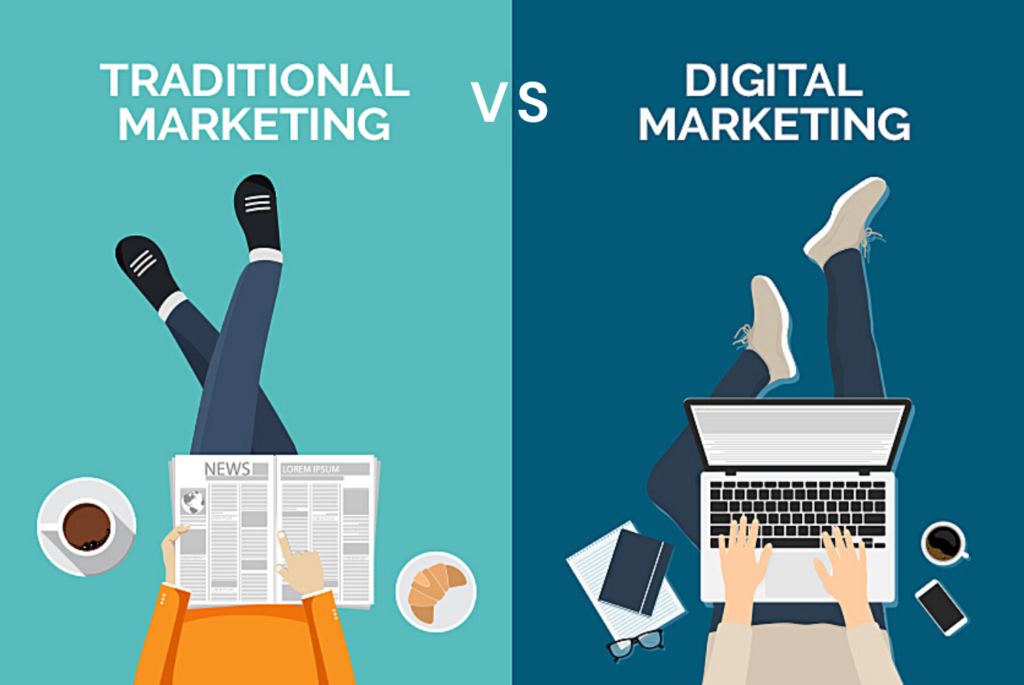
Marketing has been the core of any business’s success or failure. With the passage of time, methods of marketing have changed drastically due to the revolution in technology. Imagine yourself living in the 19th century when television hadn’t invented.
Marketing still took place in the form of billboards, newspaper brochures, and print advertisements. Television took over the print media, and marketing transitioned from print to electronic media. Fast forward, the internet came into existence, different digital platforms came into existence with websites on top, followed by social media, and many others.
So what is the difference between traditional marketing and digital marketing? Let’s explain it with the help of a table
| Description | Traditional Marketing | Digital Marketing |
| Defintion | Marketing through offline channels | Marketing through online platforms |
| Medium | TV, radio, newspapers, magazines, billboards | Websites, social media, Google, email, apps |
| Reach | Limited to local or regional areas | Global reach |
| Cost | Expensive | Affordable |
| Targeting | Broad audience | Highly targeted (age, location, interests) |
| Interaction | One-way communication | Two-way communication |
| Measurability | Difficult to measure results | Easy to track and analyze |
| Speed | Slow campaign execution | Fast and real-time |
| Flexibility | Hard to modify once launched | Easy to edit anytime |
| Engagement | Low engagement | High engagement |
| Conversion Tracking | Not possible | Fully trackable |
| ROI Measurement | Approximate | Accurate and data-driven |
| Examples | Flyers, Tv Ads, Print Ads | Google Ads, SEO, Content, Email, Social Media |
Difference Between B2B and B2C with Examples
Digital marketing is either targeted towards Business-to-Business (B2B) or Business-to-Consumers (B2C). Although the
| Aspect | B2B Digital Marketing | B2C Digital Marketing |
| Target audience | Businesses and decision makers | Common people |
| Buying decision | ROI Focused | Emotional, Impulse Driven |
| Sales Cycle | Takes weeks, months, or even years | Requires days or minutes |
| Purchase value | High ticket | Low to medium |
| Content Cycle | Educational and Detailed | Simple, conversational, and user-friendly |
| Content types | Case studies, whitepapers, webinars | Social posts, videos, ads |
| Messaging focus | Efficiency, growth, ROI | Lifestyle, emotion, desire |
| Conversion goal | Lead generation | Direct sales |
| Examples | SaaS, agencies, enterprise services | E-commerce, food, fashion, apps |
Types of Digital Marketing
Digital marketing is a broad term used for various types of media used to reach, attract, and convert customers. For instance, digital marketing can be done organically through SEO, content marketing, social media marketing, email marketing, and video marketing. Whereas paid marketing includes social media advertisement, shopping ads, pay-per-click, affiliate marketing, influencer marketing, and many more.
Digital marketing can be categorized into sub-categories such as:
- Organic Digital Marketing
- Paid Digital Marketing
Organic Digital Marketing
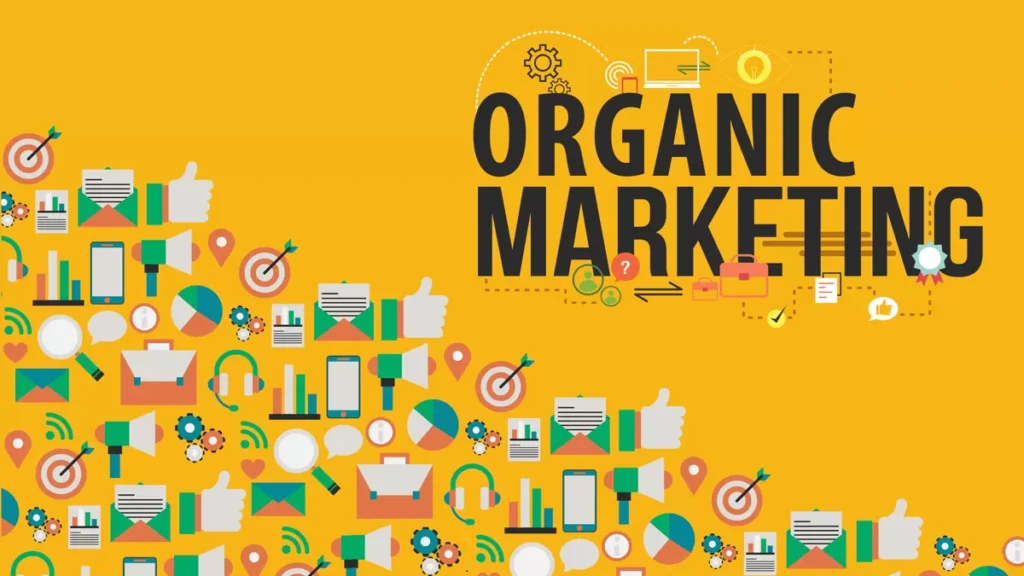
Organic digital marketing is the marketing done through non-paid channels to show visibility, gain attention, develop interest, and convert them. It can be done by creating valuable content for the audience and building relationships. Some of the types of organic digital marketing include:
- Search Engine Optimization (SEO)
- Content Marketing
- Social Media Marketing (SMM)
- Email Marketing
Paid Digital Marketing
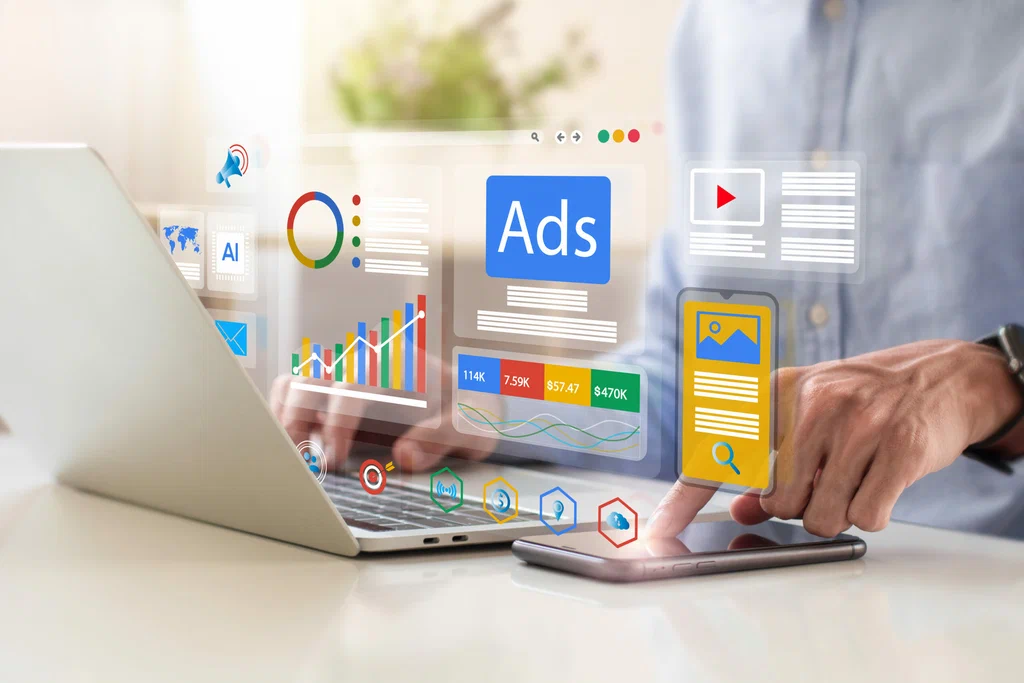
Paid digital marketing is the online advertisement by placing ads on platforms like Google, websites, and social media to reach the target audience. Although the paid promotion gives instant results, drive traffic and converts customers. However, in the long-run, the organic campaigns benefit businesses without spending a fortune. If you are a startup or have just stepped into the digital world, a paid campaign will drive instant results and create awareness among customers. Later on, you can shift towards organic methods.
Some of the examples of paid digital marketing include:
- Search Engine Marketing (SEM/PPC)
- Social Media Advertising
- Shopping Ads
- Video Advertising
Organic Vs Paid Marketing: The Differences
| Description | Organic Marketing | Paid Marketing |
| Cost | Free methods to attract traffic naturally | Paid methods to get instant traffic |
| Examples | SEO, content marketing, social media marketing | Google Ads, Meta Ads, TikTok Ads |
| Reach | Gradually and Steadily | Instantly |
| Targeting | Limited | Can be configured to one’s needs |
| Conversion Rate | Moderate | High volume |
| Best for | Brand Building and Authority | Lead Generation and Quick Sales |
| Dependency | Depends on Algorithms | Depends on the budget |
Organic Digital Marketing Types
Here are some of the types of organic digital marketing:
Search Engine Optimization (SEO)
SEO (Search Engine Optimization) is the process of improving a website’s visibility on search engines like Google. It helps your site rank higher in search results, attract more organic traffic, and reach the right audience by optimizing content, keywords, and technical performance.
In simple terms, SEO makes your website easier to find, more relevant, and more trusted online.
We will discuss SEO further in detail in this guide. Just keep on reading to get an overview of the types of digital marketing, paid and organic.
Content Marketing
The purpose of content marketing is to provide relevant and useful information to the target audience. The major objective is to distribute content across multiple platforms where the target audience is vying for the solutions to their problems.
In recent times, with the evolution of AI, content is the most dominant factor in uplifting the website from scratch to a top position. The purpose of writing content and distributing it across various platforms is to create awareness, interest, desire, and take action.
There are various ways to promote your content across different platforms, depending on the type of audience you are targeting. Some of them are infographics, ebooks, newsletters, blogs, audio content, video content, and guides. It is one of the most affordable ways to engage customers, drive interest, and let them take action.
Email Marketing
Email marketing is another form of organic marketing that allows you to reach your customers directly through email messages. The purpose is to directly target customers who have shown some interest in your products/services by signing up for a newsletter. Once the list is built, the next thing is to send them promotional emails offering new products, discounts, and giveaways. Some of the common types of email marketing include welcome emails, blog subscriptions, push notifications, and newsletters.
Social Media Marketing
Social media marketing involves promoting your business on social platforms like Instagram, Facebook, LinkedIn, X, and TikTok. Depending on the type of audience, each platform has to be selected accordingly. For instance, if you are offering a product/service to businesses, the best way is to promote it through LinkedIn. Whereas if you are targeting Gen Z to advertise and sell your product, there is no better platform than Instagram.
Social media marketing involves creating high-quality content, publishing it on a regular basis, and engaging and converting them. One of the cheapest ways to reach your target audience is through social media.
Paid Digital Marketing Types
Some of the paid digital marketing types include:
Search Engine Marketing (SEM/PPC)
Search Engine Marketing is a paid digital marketing type to boost website visibility on search engines by using paid ads. It primarily includes Pay Per Click, where businesses bid on keywords to appear on the top results on relevant search results. The ads are tailored according to the target audience by selecting specific keywords. Your search results for sponsored ads depend on the keywords you target and the target audience you want to reach.
Social Media Advertising
Social media advertising is one of the integral parts of a paid digital marketing strategy that involves social networks like Meta, TikTok, and LinkedIn. The purpose is to deliver promotional content to deliver targeted content, products, or services to the users based on their demographics, such as age, interest, gender, and behavior. Social media advertising involves hyper-targeting and personalization to reach potential customers through various formats such as carousel, video, image, or content.
Shopping Ads
Shopping ads are online ads for e-commerce stores to display products on the Google SERP results with complete details such as photo, price, and business name. The purpose is to connect the highly interested customers with the retailers to view product detail before clicking.
Unlike other types of paid ads, shopping ads do not require any keywords. Instead, product data is used from Google Merchant Center.
Video Advertising
Video advertising is another paid form of marketing that uses short and engaging videos to promote services and products across various platforms. These video ads are displayed on platforms like YouTube, streaming services, and social media networks.
The ad is displayed pre, post, and during the content, which helps in capturing attention and building an emotional connection. Video advertising works best for b2b advertisement, such as SaaS products. In today’s digital era, when attention span is short, video advertisement needs to be engaging from the beginning until the end.
Importance and Benefits of Digital Marketing for Businesses
Digital marketing acts as a survival kit for small businesses. The big giants have already taken the leap, and without much effort, they have already captured a major share of the market. To see the importance of digital marketing for small businesses, let’s review some studies and statistics.
Importance of Digital Marketing Statistics 2026
- By 2026, the global digital advertising and marketing market is expected to hit $786.2 billion (Source).
- 93% of traffic to websites is from search engines (Source)
- A strong online presence is vital. 97% of consumers search a business online before visiting (Source).
- 75% of users don’t click past the first page of results (Source).
- 89% of marketers report SEO delivers results, underscoring its vital role in digital marketing (Source)
- Search advertising continues to dominate digital marketing, projected to reach $202.4 billion in volume (Source)
Benefits of Digital Marketing for Small Businesses
The statistics show how digital marketing is becoming prevalent and expected to grow manifold in the future. In this section, we are going to discuss the benefits of digital marketing for small businesses.
Reaching Target Audience Worldwide
Who could have imagined that marketing would reach globally with just a few clicks? Unlike traditional forms of marketing, such as TV ads, billboards, brochures, and cold calling, digital marketing tends to dominate the overall business.
The reach has expanded not only to the residents of the country or local community but also to the audience worldwide. Comparing the cost of digital marketing, traditional marketing can cost a fortune for small businesses, startups, and solopreneurs. Small businesses can expand much faster by adopting the right digital marketing strategies. If you don’t know what to do or how to do digital marketing, you can simply hire a digital marketing agency.
Digital Marketing is Cost-Effective
Digital marketing is cost-effective compared to traditional marketing. Even if you are low on funds, it can reap greater rewards without going bankrupt. Compare it to a print ad that can cost anywhere between $1500-$3000. From billboards to flyers, brochures, and other print material, the funds would vanish into the air. Moreover, tracking the conversion isn’t possible for businesses.
The multifaceted digital marketing platforms make it easier to reach a large chunk of the target audience worldwide. Conversions, ROI, audience reach, and engagement can be easily traced through different paid and free tools.
In case a business decides to go with paid ads, the cost is still nominal compared to traditional marketing.
Build Brand Recognition
Small businesses that have entered the market might be struggling against big giants. The problem is that these small businesses might need ages to create brand awareness and attract customers towards their products/services through traditional marketing.
However, digital marketing makes it easy for startups and small businesses to create brand identity faster than ever and on multiple platforms without incurring hefty costs. From creating a unique identity to capitalizing it on various platforms, digital marketing is no less than a blessing for small businesses.
Tracking of the Results
Offline marketing not only costs you a fortune, but also can’t track the output it has yielded. From customer interaction to final sales, print and TV ads keep the businesses in conudrum. However, it is not the case when it comes to digital marketing. You can not only track the performance of your ads and organic campaigns, but also track how the user behaves on your website with the help of heatmaps and A/B testing. Moreover, if you are running paid ads, you can also track the clicks, conversions, and interactions.
Personalization is Easy
Personalization is one of the benefits that makes digital marketing unique and a top priority for brands to stay on top. Instead of relying on traditional methods, companies prefer digital marketing to reach a wider audience while also filtering the audience based on their demographics and interests.
For instance, an action figure of Marvel Superheroes can be shown only to teenagers or grown-ups instead of adults and older people. By selecting the audience based on their interests, location, age, and gender, the return on investment is much higher than using traditional marketing.
Accessible to the Customers
Digital marketing is all about staying visible, relevant, and to the point. People don’t have time to browse the 2nd page of Google. They only click on the top 4 to 5 results or search for the brand they love to shop from.
Optimizing the content and doing the right SEO helps businesses stay on top of search results. Moreover, online businesses stay visible 24/7, which means customers can access the products/services without waiting. The same is not relevant when it comes to offline stores.
Engage with Customers in Different Stages
Digital marketing for small businesses can engage with customers at several points during the buying journey. For instance, a person in the first stage of the buying funnel might need to know the basics of the SaaS product, its benefits, and how it helps in various ways. Whereas a person who is on the final stage of the buying process will likely need to know about the promotional offers, discounts, and other support offered after or during purchase.
Measurable Results and Performance
Digital marketing comprises different techniques and methods to gain visibility and ranking on search engines. For instance, a well-written SEO optimized content performance can be measured by its average position, clicks, and impressions.
Whereas off-page and on-page SEO can help in generating leads, traffic, and the overall reputation of the website. In short, digital marketing campaigns can be measured through different tools, and if needed, can be altered or improved for better results.
Increase Revenue
Digital marketing campaigns are cost-effective compared to traditional marketing campaigns. However, businesses need to adopt the right strategies to beat their rivals. As most of the businesses have gone online, getting the desired results in a short time might not be possible.
However, using the right online platforms to reach the target audience, adopting tried and tested strategies, and keeping up with the latest trends will help increase the overall growth and revenue of the company.